New results of the Mother’s Day Solar Storm show a particularly rare phenomenon in Earth’s magnetic environment
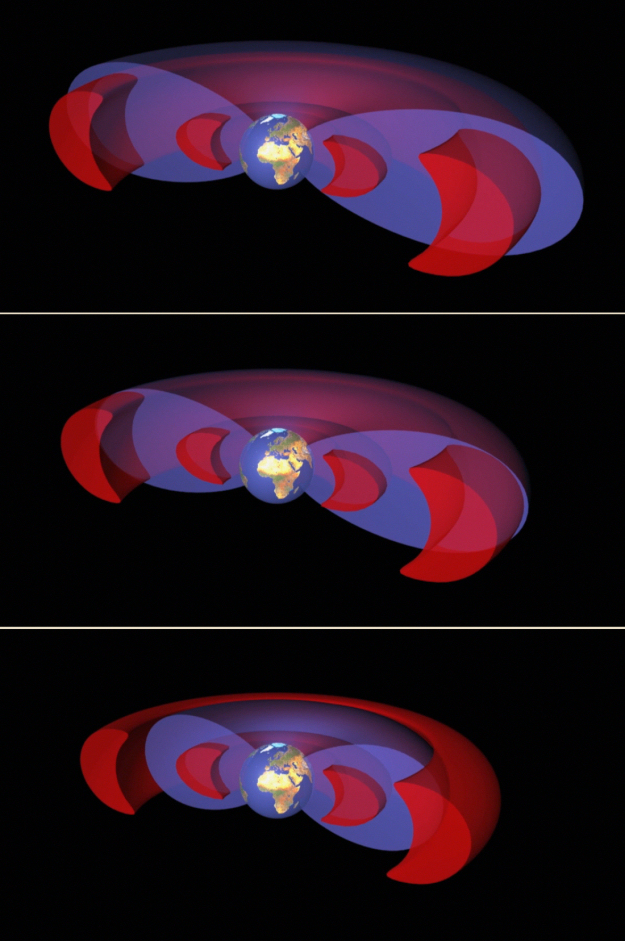
Our researchers have published a new article about a surprising phenomenon in the Earth’s magnetic environment ! They found that, following the extreme solar event of May 11, 2024, the Earth was surrounded by FOUR radiation belts instead of two.
Usually, the Earth is encircled by two radiation belts. These are two bands around our planet in which energetic particles are trapped by the Earth’s magnetic field. The particles are trapped because they are electrically charged and thus respond to their magnetic environment (electricity and magnetism interact with each other, since they are two aspects of the same force: electromagnetism).
On 11 May 2024, there was an extreme geomagnetic storm raging in the Earth’s magnetosphere, caused by several powerful coronal mass ejections from the Sun. Scientists have called this major event the Mother’s Day Solar Storm. We are going to recreate here the series of events in order. So put on your seatbelts as we take you through a fascinating journey into space physics ! 🤠
1️⃣ In May 2024, the Sun was in a phase of maximum activity (a cycle of about 11 years), and a huge sunspot had been forming since the beginning of May. Sunspots are dark, cooler spots on the surface of the Sun and indicate high magnetic activity. When the Sun is at its most active, there are more and bigger sunspots.
2️⃣ This sunspot generated several X-class solar flares (these are the most powerful flares, so, quite a big deal). A solar flare is like the Sun sneezing out huge clouds of magnetized plasma (which is basically electrically charged gas composed of energetic ionized particles), as well as bursts of intense electromagnetic radiation (mainly visible light, X rays, and UltraViolet radiation that burns our skin in spring and summer).
3️⃣ The Sun ejected both energetic particles (corpuscular radiation) and intense flashes of electromagnetic radiation in the direction of the Earth. The plasma particles took a few days to reach us, while the electromagnetic radiation travelled at the speed of light, taking only about 8 minutes, and several of those hit the Earth’s magnetosphere in quick succession, infusing enormous amounts of energy into the Earth’s magnetosphere.
4️⃣ All this energy at once was a bit much to handle, and it caused a huge geomagnetic storm around our planet. This means that the magnetic field around the Earth gets deformed, pushing the magnetic field lines inwards, closer to our planet. This can cause aurora to occur at lower latitudes. We saw this happen during the night between 10 and 11 May 2024.
5️⃣ A geomagnetic storm also injects larger than normal amounts of high-energy particles into the Earth’s magnetic environment (like overexcited toddlers running around your living room). And here is where it got interesting for BIRA-IASB’s space physicists. The deformation of the Earth’s magnetosphere and the higher amount of particles temporarily increased the usual two electron radiation belts around Earth to four! Three belts had already been previously observed once, but four was a new record! Moreover, the strong geomagnetic storms observed more recently after May 2024 led recurrently to three belts remaining during about four weeks after the events, which is also very unusual.
And this concludes our investigation, though if you’d like to continue, the paper our researchers published is available online and in full here.
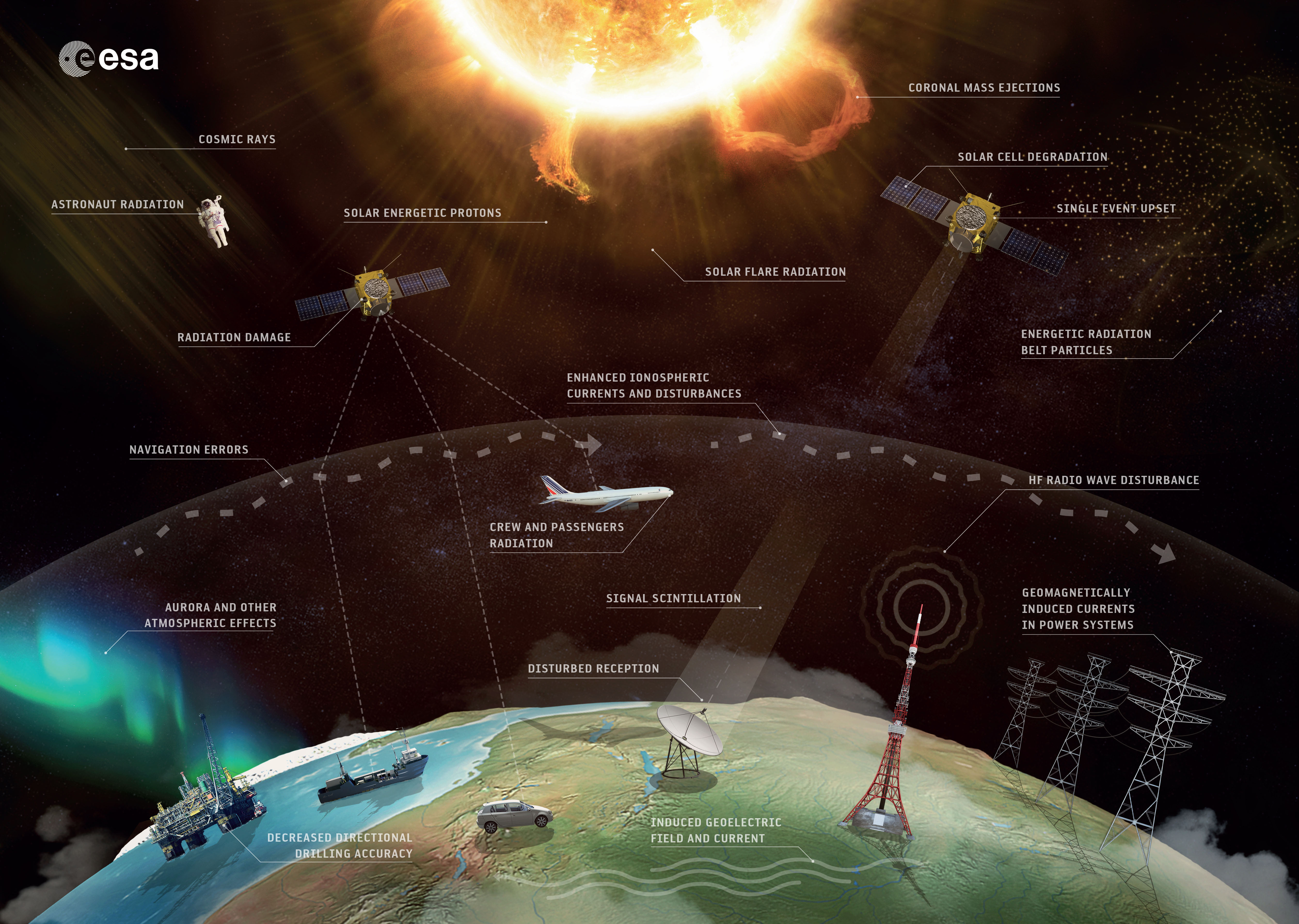
The Mother’s Day Solar Storm was the strongest storm observed in the 20 previous years, and thanks to instruments like EPT (to which BIRA-IASB engineers contributed), our researchers were able to have a front-row seat. Events like these help our researchers to better understand the highly complex interaction between the Sun and the Earth’s magnetosphere, which will in turn help them to provide better forecasts and protect our technology and ourselves from the Sun’s sneezes. Because even if it’s just a sneeze to the Sun, it’s still a very dangerous one to us.
News image 1
News image legend 1
News image 2