
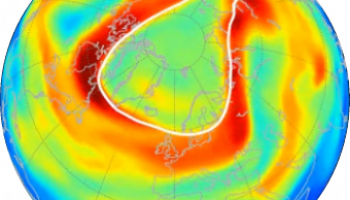
This spring, the Arctic was marked by what may be the largest hole in the ozone layer ever recorded over the North Pole. The ozone hole is a common seasonal phenomenon observed yearly over the South Pole areas (Antarctica). Ozone holes over the Arctic, however, are rarer. Since the start of satellite observations over this region in 1978, only one Arctic ozone hole has formed above the North Pole before, in 2011. Unusual meteorological conditions are responsible for this year’s exceptional ozone hole at the North Pole.
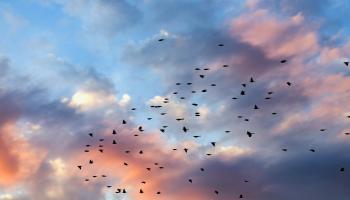
A question came up this week: “is it just an impression, or is the sky clearer and “bluer” since the start of the lockdown?” To be clear, we’re not talking about the weather or clouds, but the colour of the sky itself.
To answer the question, our scientist, Christine Bingen, first wrote an article about where the blue colour of the sky comes from.
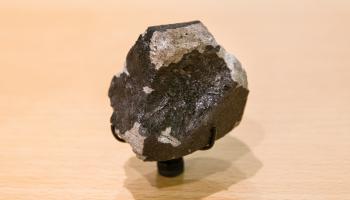
It's incredible to think that pieces of a protoplanet – a large asteroid/small baby planet that never had the chance to become a real one - have been scattered around the solar system and made their way to planet Earth, in our time! And not just that, one piece of the protoplanet Vesta even made it all the way to Belgium. It was seen falling into a barn in the southern village of Tintigny in 1971, by Mr Eudore Schmitz. At the time, it was entrusted to the village teacher for identification, but fell into oblivion for over 40 years.
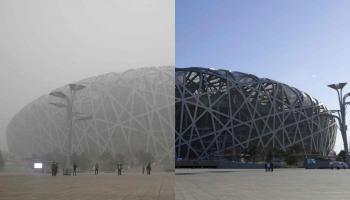
Many articles and statements have circulated about the effects of the Corona virus on air quality, including from us (see article about NO2 pollution in China). We would like to think that air quality has vastly improved since our lives have been virtually stopped in their tracks, but, as always, reality is complex. Here are a few scientific facts for you.
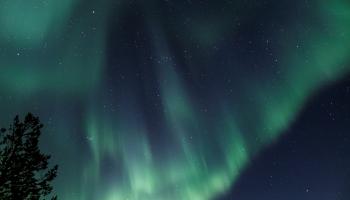
The edge of the world, where would that be? Our great-great-great-many-times-great grandfathers and grandmothers pondered this question with conviction that it must be found somewhere. Of course, now we know there is no end or edge (though sadly some individuals in the world appear not to have grasped this idea yet), but there are still places where you can see the ‘end of our world’ and maybe feel like you’re there.
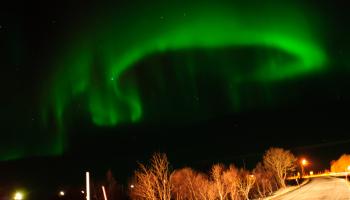
The ASPA instrument had quite an unconventional birth compared to the usual remote sensing instruments that we develop at BIRA-IASB. It was designed, built, tested, and used without any dedicated budget line. Still, to my experience, its realization is a huge success given the limited resources (both in time and money) that were available. And this could only happen thanks to the motivation and commitment of the engineering department, which backed the ideas of some scientists to turn a nice concept on paper into a working and reliable instrument, operated in a harsh environment.